| Product Code | Package Size | Unit of Measure |
|---|---|---|
| ADDCN-EA | 16 oz. Bottle | Each |
| ADDCN-CA | 16 oz. Bottle | Case of 12 |
| ADD05-EA | 5 Gallon Pail | Each |
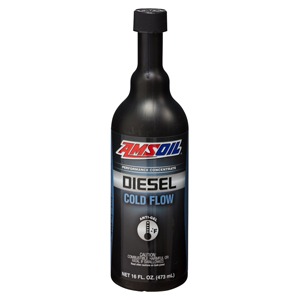
AMSOIL Diesel Cold Flow Fuel Additive keeps diesel engines running in cold weather by lowering the cold filter-plugging point (CFPP) by up to 40°F (22°C) in ultra-low-sulfur diesel. It is a targeted, alcohol-free cold flow improver built for diesel trucks, equipment, and fleet vehicles that operate in freezing temperatures.
Diesel fuel contains paraffin wax that begins to crystallize as temperatures drop. Most #2 diesel fuels reach their cloud point near 32°F (0°C), and low-quality fuels can start forming wax crystals as warm as 40°F (4°C). Once those crystals grow large enough, they clog the fuel filter, starve the engine of fuel, and leave you stranded. This is a common problem for Duramax, Cummins, and Power Stroke owners in cold climates, as well as fleet operators running equipment through northern winters.
LOWERS COLD FILTER-PLUGGING POINT BY UP TO 40°F
The cold filter-plugging point is the temperature at which wax crystals actually block the fuel filter and shut down fuel flow. AMSOIL Diesel Cold Flow lowers the CFPP by up to 40°F (22°C) in ULSD, per ASTM D6371 testing. Testing across diesel fuels sourced from seven U.S. states (Illinois, Delaware, Colorado, Ohio, Utah, Kansas, and Wyoming) confirmed significant CFPP improvement in every sample. In one Wyoming fuel sample, the CFPP dropped from -31°F to -41.8°F after treatment. Fuels from Colorado and Ohio showed similar reductions, moving from single-digit baseline temperatures well into negative territory. This kind of protection matters when you are parking a Ram 2500 or Ford F-250 outside overnight in Minnesota or Montana.
PREVENTS WAX SETTLING DURING STORAGE
Most diesel cold flow additives modify wax crystals to keep them from clogging filters. AMSOIL Diesel Cold Flow goes further with a wax anti-settling component not found in many competing products. This additive drastically reduces the size of wax crystals so they resist settling to the bottom of the tank. Settled wax is a real problem for diesel trucks, generators, and farm equipment that sit idle in cold weather. When the engine draws fuel from a layer of concentrated wax at the bottom of the tank, filter plugging and no-starts follow quickly. The anti-settling chemistry in Diesel Cold Flow keeps crystals small and suspended so fuel flows consistently through the filter.
REDUCES THE NEED FOR #1 DIESEL FUEL
Switching to #1 diesel or blending it with #2 diesel is the traditional approach to cold-weather operability. The tradeoff is real: #1 diesel carries only about 95 percent of the energy content of #2 diesel. That means reduced fuel economy, less horsepower, and a higher price at the pump. AMSOIL Diesel Cold Flow allows you to keep running straight #2 diesel through colder temperatures, preserving the energy density and cost savings of your standard fuel. For a Cummins 6.7L towing through the Rockies in January or a fleet of Kenworths running freight across the upper Midwest, the fuel economy difference adds up fast.
INHIBITS FUEL-FILTER ICING
Water contamination in diesel fuel is common, especially in tanks exposed to temperature swings that create condensation. When that water reaches the fuel filter in freezing conditions, ice crystals can block flow just as effectively as wax. Diesel Cold Flow includes anti-icing chemistry to prevent fuel-filter icing and keep fuel moving in sub-zero conditions. This is particularly relevant for diesel pickup trucks, commercial vehicles, and off-road equipment operating in the Ram 2500, 3500, Ford F-350, Chevy Silverado 2500HD, and Freightliner Cascadia range of applications.
COMPATIBLE WITH ALL DIESEL FUELS
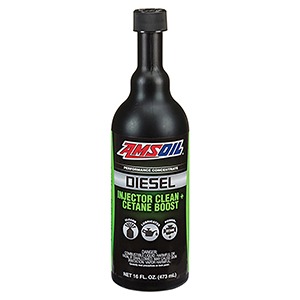
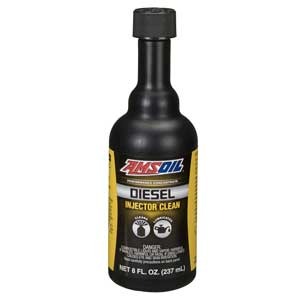
AMSOIL Diesel Cold Flow is formulated for use in #1 diesel, #2 diesel, ultra-low-sulfur diesel (ULSD), biodiesel blends, heating oils, and kerosene. It is alcohol-free and safe for use in all diesel fuel systems, including those with diesel particulate filters and modern emissions equipment. It pairs well with AMSOIL Cetane Boost and AMSOIL Diesel Injector Clean for comprehensive fuel system treatment.
DOSAGE AND USAGE NOTES
Treat rate is 1 oz. per 5 gallons of fuel. One 16 oz. bottle treats up to 80 gallons. Add Diesel Cold Flow to the tank before filling, and always add it when the fuel temperature is above the cloud point. It will not reverse gelling or dissolve wax crystals once they have already formed. For fuel that has already gelled, use AMSOIL Diesel Recovery. Do not store the product at temperatures below 0°F (-18°C).
| Additive Amount | Fuel Volume |
|---|---|
| 1 oz. | 5 gal. |
| 2 oz. | 10 gal. |
| 6 oz. | 30 gal. |
| 16 oz. | 80 gal. |
What vehicles and equipment can use AMSOIL Diesel Cold Flow Fuel Additive?
AMSOIL Diesel Cold Flow Fuel Additive is designed for a broad range of diesel-powered vehicles and equipment, including auto/light trucks, motorcycles, ATVs, UTVs, snowmobiles, marine outboards, PWCs, heavy-duty on-road and off-road vehicles, and agricultural equipment. It is specially formulated for use with diesel fuels, heating oils, and kerosene, making it suitable for virtually any diesel application that faces cold-weather operability challenges.
How does AMSOIL Diesel Cold Flow Fuel Additive prevent diesel fuel gelling in winter?
As temperatures drop, the wax naturally present in diesel fuel begins to crystallize, eventually clogging fuel filters and starving the engine of fuel. AMSOIL Diesel Cold Flow lowers the cold filter-plugging point (CFPP) by up to 40°F (22°C) in ultra-low-sulfur diesel (ULSD), preventing wax crystals from blocking fuel flow. It also includes a wax anti-settling component not found in other market-leading products, which drastically reduces wax crystal size so they can pass through the fuel filter more effectively, enhancing engine reliability and low-temperature startability.
What does cold filter-plugging point (CFPP) mean and how much does AMSOIL Diesel Cold Flow lower it?
The cold filter-plugging point (CFPP) is the temperature at which wax crystals in diesel fuel become large enough to clog the fuel filter, preventing fuel from reaching the engine. AMSOIL Diesel Cold Flow lowers the CFPP by up to 40°F (22°C) in ultra-low-sulfur diesel (ULSD). This significant reduction extends the temperature range at which your diesel engine can operate reliably without fuel-flow issues.
Is AMSOIL Diesel Cold Flow better than blending #1 and #2 diesel fuel for cold weather?
Blending #1 diesel fuel with #2 diesel fuel is a traditional cold-weather solution, but #1 diesel fuel contains about 95 percent of the energy content of #2 diesel fuel, resulting in reduced fuel economy, less horsepower, and higher cost at the pump. AMSOIL Diesel Cold Flow minimizes the need for blending by lowering the CFPP of #2 diesel by up to 40°F (22°C), helping maintain fuel economy and engine performance. It also features a unique wax anti-settling additive not found in other market-leading products, providing superior cold-weather protection without sacrificing power or efficiency.
When should I add AMSOIL Diesel Cold Flow Fuel Additive to my tank and how do I use it?
AMSOIL Diesel Cold Flow must be added before filling the tank and at temperatures above the diesel fuel's cloud point — the temperature at which wax begins to crystallize. It will not reverse gelling or dissolve wax crystals once they have already formed, so proactive treatment is essential. Do not store the product at temperatures below 0°F (-18°C). For maximum diesel performance, AMSOIL recommends using it alongside AMSOIL Cetane Boost and AMSOIL Diesel Injector Clean.
Is AMSOIL Diesel Cold Flow Fuel Additive safe for biodiesel and ultra-low-sulfur diesel (ULSD)?
Yes, AMSOIL Diesel Cold Flow is safe for use in all diesel fuels, including biodiesel, #1 diesel, and #2 ultra-low-sulfur diesel (ULSD). It is also an alcohol-free formula, so it will not harm fuel system components. The product is additionally suitable for use with heating oils and kerosene, making it a versatile cold-weather fuel treatment across a wide range of diesel fuel types.

 Product Details PDF - AMSOIL DIESEL COLD FLOW FUEL ADDITIVE